



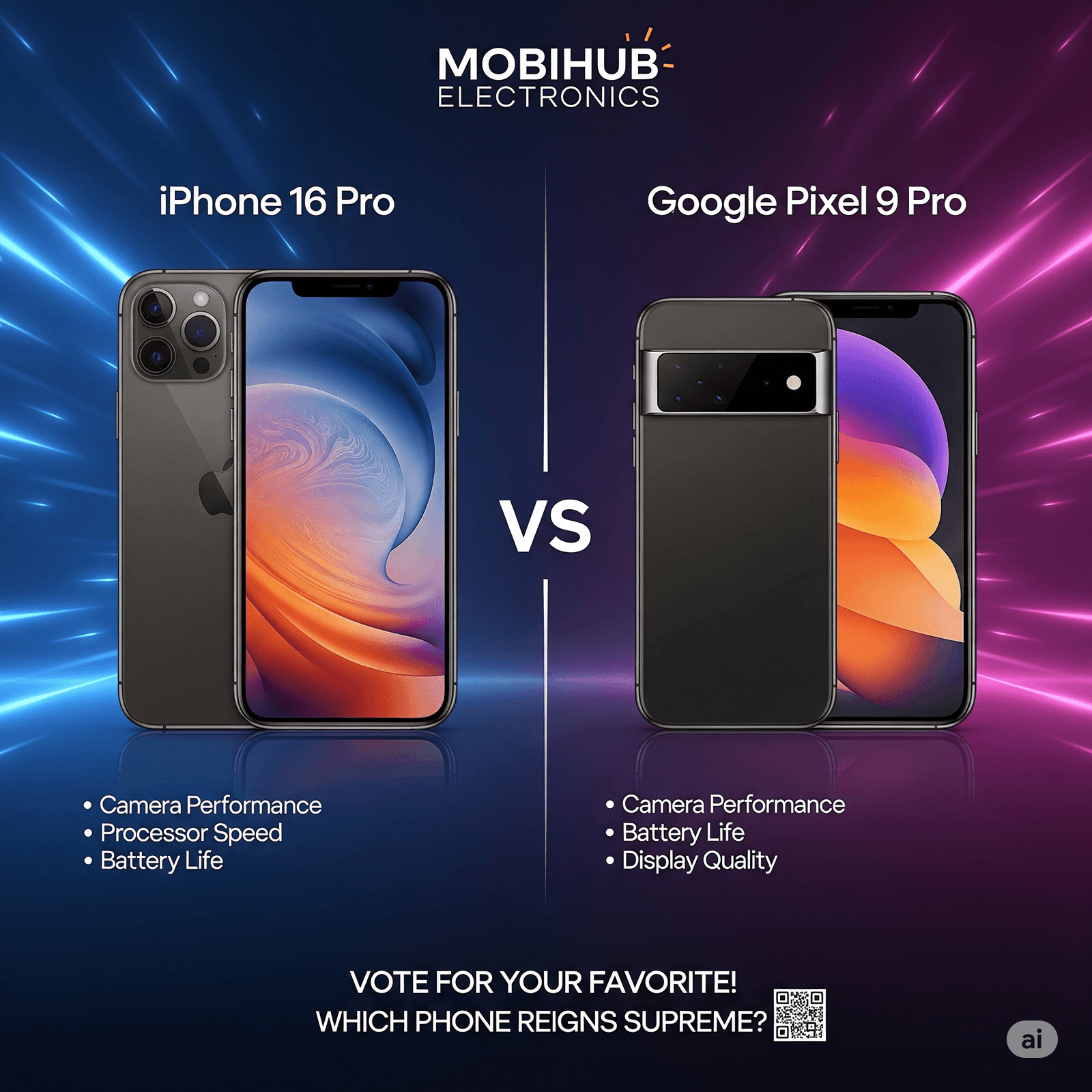
In the rarefied air of premium smartphones, the competition is no longer just about raw specs. It’s a battle of ecosystems, of design philosophies, and, increasingly, of artificial intelligence. In the Kenyan market, where a flagship phone is a significant investment, the choice between the iPhone 16 Pro and the Google Pixel 9 Pro represents a decision between two distinct visions for the future of mobile technology.
Apple’s iPhone 16 Pro is the culmination of years of meticulous refinement, offering a seamless, secure, and powerful user experience within a tightly integrated ecosystem. It is a device that promises to “just work.” On the other hand, Google’s Pixel 9 Pro is an AI-first masterpiece, a bold statement that redefines what a smartphone can do with on-device intelligence. It is a phone that promises to be “magically helpful.”
This 3000-word blog post will provide a meticulous, Kenyan-focused review, dissecting every aspect of these two formidable devices. We will explore their design, displays, performance, camera systems, battery life, and, most importantly, the clear, unique features that make each a better choice for different types of Kenyan consumers.
Part I: The Premium Aesthetic – Design, Build, and Display
A flagship phone must not only perform like a champion but also look and feel the part. Both the iPhone 16 Pro and the Google Pixel 9 Pro are crafted from premium materials, but with distinct design philosophies.
The iPhone 16 Pro continues Apple’s legacy of elegant, minimalist design. It’s built from aerospace-grade Grade 5 titanium, a material that is both incredibly strong and impressively light. The new design features even thinner borders, making for a larger 6.3-inch Super Retina XDR display in a chassis that’s still comfortable to hold. The new Camera Control button is a tactile and welcome addition, mimicking a DSLR shutter button. The display itself is a marvel, an LTPO Super Retina XDR OLED with a 120Hz ProMotion display that offers a silky-smooth experience and a peak brightness that ensures excellent visibility under the harsh Kenyan sun.
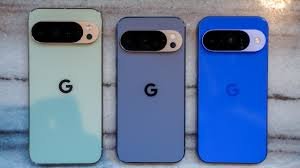
The Google Pixel 9 Pro has a more distinctive, modern design. It features a new polished aluminum frame and a glass back with the iconic, streamlined camera bar that has become a defining feature of the Pixel line. The display is a beautiful 6.3-inch Super Actua display, also an LTPO OLED panel with a 120Hz refresh rate. What sets it apart is its astounding peak brightness of up to 3000 nits, making it one of the brightest displays on any smartphone. The Pixel 9 Pro also boasts an IP68 rating, a standard for flagship phones, and the phone feels solid and well-built in the hand.
Clear Unique Comparison: Design and Display
- iPhone 16 Pro’s Unique Advantage: The iPhone 16 Pro’s most compelling feature is the new Camera Control button. This hardware innovation provides a tactile, two-stage shutter button that gives photographers a more “real camera” feel. It allows users to focus with a half-press and capture with a full press, making it easier to take photos with one hand and to capture those split-second moments. The use of Grade 5 titanium also provides a premium feel and durability that is unmatched.
- Google Pixel 9 Pro’s Unique Advantage: The Google Pixel 9 Pro’s primary strength is its stunning Super Actua display with an industry-leading 3000 nits of peak brightness. For a Kenyan consumer who spends a lot of time outdoors or in bright environments, this display provides an undeniable advantage. The screen remains vibrant and readable even in direct sunlight, which is a practical benefit in day-to-day use.
Part II: The Brains of the Operation – Performance and Software
Performance is where these two giants truly showcase their technological prowess, but with two different approaches to mobile computing.
The iPhone 16 Pro is powered by the new A18 Pro chip. This is a highly efficient and powerful processor, designed for raw performance and seamless integration with the iOS ecosystem. The A18 Pro features a next-generation Neural Engine that is engineered to handle Apple Intelligence, Apple’s new AI suite. The phone runs on iOS 18, which is renowned for its simplicity, security, and the tight-knit ecosystem of Apple’s devices and services. Apple has a legendary track record of providing major OS updates for many years, ensuring the phone’s longevity.
The Google Pixel 9 Pro is powered by the custom-designed Google Tensor G4 chipset. This processor is not focused on raw benchmarks, but on exceptional on-device AI. The Tensor G4 is the engine behind the “Magic” features that define the Pixel experience, from real-time transcription to powerful on-device photo editing. The phone comes with a generous 16GB of RAM and runs on a pure, unadulterated version of Android 15. Google has made a monumental commitment to 7 years of major OS and security updates, matching Apple’s long-term support for its premium devices.
Clear Unique Comparison: Performance and Software
- iPhone 16 Pro’s Unique Advantage: The iPhone 16 Pro’s key feature is its unmatched synergy between the A18 Pro chip and the iOS ecosystem. Apple’s tight control over both hardware and software results in an incredibly optimized and fluid user experience. The phone also benefits from Apple’s exclusive features like AirDrop, FaceTime, and the iMessage ecosystem, which are a major draw for users already invested in the Apple world. The seamless integration of Apple Intelligence, with a focus on privacy and on-device processing, also provides a powerful and secure AI experience.
- Google Pixel 9 Pro’s Unique Advantage: The Google Pixel 9 Pro’s most significant unique selling point is its deeply integrated and powerful Google AI features. The Tensor G4 chip is specifically designed to handle on-device AI tasks, enabling a range of exclusive features like Magic Editor, Best Take, and Circle to Search, which are deeply integrated into the OS. The 7-year update policy is a monumental advantage for the Kenyan consumer, as it makes the phone a truly long-term investment.
Part III: The Ultimate Lens – Camera System
The camera is a major deciding factor for any flagship phone. Both the iPhone 16 Pro and the Google Pixel 9 Pro offer professional-grade photography tools, but with different approaches.
The iPhone 16 Pro has a powerful triple-camera system: a new 48MP main sensor with OIS, a 48MP ultrawide lens with autofocus, and a 12MP telephoto lens with 5x optical zoom. The 48MP ultrawide lens is a significant upgrade, offering both a wider field of view and the ability to capture macro shots with incredible detail. Apple’s camera system is known for its computational photography, which results in photos with a natural and true-to-life color profile. The new camera arrangement also allows for spatial video recording, a unique feature for Apple’s ecosystem.
The Google Pixel 9 Pro also comes with a versatile triple-camera system: a 50MP main sensor with OIS, a 48MP ultrawide lens with Macro Focus, and a dedicated 48MP telephoto lens with 5x optical zoom. The inclusion of a telephoto lens with optical zoom is a significant advantage over many rivals. What sets the Pixel’s camera apart is not just the hardware, but the software magic that happens behind the scenes. Its camera system consistently produces stunning photos with exceptional dynamic range and a unique color profile, often referred to as “Pixel look.” The new Video Boost feature promises to enhance videos with cloud-based AI, and it supports 8K video recording.
Clear Unique Comparison: Camera System
- iPhone 16 Pro’s Unique Advantage: The iPhone 16 Pro’s most compelling camera feature is its unmatched video recording capabilities and the new spatial video feature. The phone offers a level of video quality and stabilization that is widely regarded as the industry standard. The addition of a higher-resolution ultrawide lens with macro capabilities and the 5x optical zoom provides a versatile toolkit for any photographer.
- Google Pixel 9 Pro’s Unique Advantage: The Google Pixel 9 Pro’s key differentiator is its AI-powered camera software and its superior on-device editing tools. The Pixel’s camera is a “point-and-shoot” champion, consistently producing stunning photos with minimal effort. Features like “Magic Editor,” “Best Take,” and “Photo Unblur” provide a level of post-capture editing that is unique to the Pixel ecosystem. The camera is perfect for a user who wants the best possible photo with a single tap.
Part IV: The Marathon Runner – Battery Life and Charging
In a market where being connected is paramount, a phone’s battery life and charging speed are non-negotiable.
The iPhone 16 Pro comes with a larger 3,582mAh battery, which promises excellent endurance, with Apple claiming significant improvements in power management. It supports wired charging up to 27W, which can get the phone to 50% in about 30 minutes, and wireless charging via MagSafe. While the charging speeds are a weakness when compared to the competition, the phone’s exceptional power efficiency often means it can last a full day of use.
The Google Pixel 9 Pro has an even larger 4,700mAh battery and supports a faster 27W wired charging, which can get the phone to 55% in just 30 minutes. It also supports 21W wireless charging with a Pixel Stand and a standard 12W with a Qi-compatible charger. The inclusion of reverse wireless charging is a useful feature for charging accessories like earbuds on the go.
Clear Unique Comparison: Battery and Charging
- iPhone 16 Pro’s Unique Advantage: The iPhone 16 Pro’s key feature is its incredible power efficiency, which translates to superior real-world battery life. The tight integration between the A18 Pro chip and iOS means that the phone can squeeze more out of its battery, often lasting longer than its rivals with similar or even larger battery capacities.
- Google Pixel 9 Pro’s Unique Advantage: The Google Pixel 9 Pro’s most significant unique selling point is its larger battery capacity and its robust charging ecosystem. While the wired charging speed is not the fastest, the phone’s larger battery and the convenience of reverse wireless charging provide a more reliable and versatile power solution for a heavy user.