




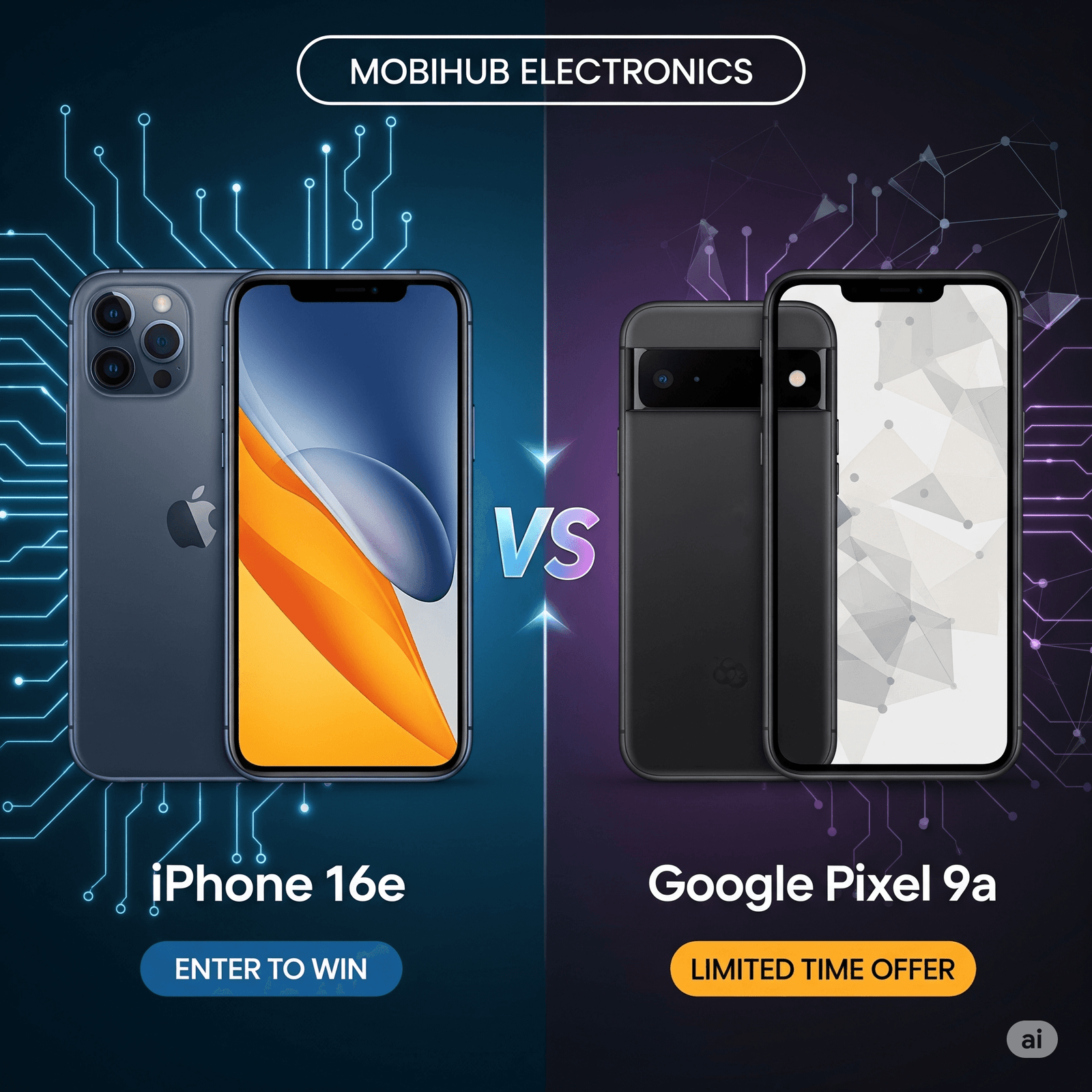
In the Kenyan smartphone market, the mid-range segment is where the real competition heats up. It’s the sweet spot for consumers who want premium features without the flagship price tag. This year, the battle for the hearts and wallets of Kenyans is a fierce one, pitting two of the biggest names in tech against each other with their budget-friendly offerings: the Apple iPhone 16e and the Google Pixel 9a.
These two phones are more than just a step down from their more expensive siblings. They represent a concentrated effort by their respective brands to deliver a core experience that is both excellent and accessible. The iPhone 16e is a gateway into Apple’s renowned ecosystem, promising a seamless and secure user journey. The Google Pixel 9a, on the other hand, is a showcase of pure Android and Google’s AI-driven innovation. This 3000-word blog post will be your ultimate guide to this captivating showdown. We will meticulously compare every facet of these two devices, from their design and display to their cameras, performance, and most importantly, their value proposition in the Kenyan market.
Part I: The First Encounter – Design, Build, and Display
The look and feel of a smartphone are crucial, and both the iPhone 16e and the Pixel 9a have distinct design philosophies.
The Apple iPhone 16e maintains Apple’s timeless and durable design language. It features a flat-edged aluminum frame and a glass back, protected by Apple’s proprietary Ceramic Shield glass on the front. This gives it a solid, premium feel in the hand, much like its more expensive siblings. The phone is compact and lightweight, with a 6.1-inch OLED display that is both sharp and vibrant. Its peak brightness of around 1200 nits is excellent for most situations. A notable design element is the continued use of a notch at the top of the display, which houses the selfie camera and Face ID sensors, setting it apart from the Dynamic Island found on the Pro models. The iPhone 16e also boasts a robust IP68 rating, offering top-tier protection against dust and water.
The Google Pixel 9a, in contrast, has a slightly larger footprint and a more modern design. It features an aluminum frame with a durable composite matte plastic back, a design choice that is both comfortable and practical. The camera module is a small, subtle protrusion on the back, a departure from the traditional Pixel camera bar, giving it a clean aesthetic. Its display is a larger 6.3-inch OLED panel with a significantly higher peak brightness of 2700 nits, making it exceptionally vibrant and readable even in the harshest of sunlight. The screen is protected by Corning Gorilla Glass 3, and like the iPhone, it has an IP68 rating for superior dust and water resistance.
Clear Unique Comparison: Design and Display
- iPhone 16e’s Unique Advantage: The iPhone 16e’s most compelling design feature is its Ceramic Shield glass, which is touted to be the toughest smartphone glass on the market. This gives it a clear edge in real-world durability and drop resistance. It’s the perfect choice for a user who values a premium feel and a strong, familiar design.
- Google Pixel 9a’s Unique Advantage: The Pixel 9a’s display is its standout feature. The combination of a slightly larger screen and a staggering peak brightness of 2700 nits makes it a clear winner for anyone who spends a lot of time outdoors. For a country like Kenya where the sun is often a factor, this display is in a league of its own for readability and media consumption.
Part II: The Engine Room – Performance, OS, and the AI Battle
The heart of these phones is a battle of ecosystems, and their respective processors and software are a testament to their unique approaches.
The iPhone 16e is powered by Apple’s new A18 Bionic chip, a processor that is incredibly fast and efficient. This chip, combined with the seamless integration of hardware and software, provides an exceptionally smooth and responsive user experience. The phone runs on iOS 18, which introduces a suite of new AI features called Apple Intelligence. This includes a more natural-sounding Siri and on-device AI for tasks like writing and image generation. Apple’s ecosystem is its greatest strength, offering unparalleled security, privacy, and seamless connectivity with other Apple devices like MacBooks and AirPods.
The Google Pixel 9a is a pure AI powerhouse. It is equipped with the Google Tensor G4 chipset, the same processor found in its flagship siblings. This is a game-changer for the mid-range market. The Tensor G4 is specifically designed to handle on-device machine learning and AI tasks. The phone runs on a clean, bloatware-free version of Android 15, and its software is deeply integrated with the Gemini AI assistant. The Pixel 9a’s AI capabilities go beyond simple voice commands, with features like “Circle to Search,” advanced call screening, and “Magic Eraser” for photos. Google also provides an industry-leading 7 years of OS and security updates, ensuring the phone remains secure and up-to-date for a very long time.
Clear Unique Comparison: Performance and Software
- iPhone 16e’s Unique Advantage: The iPhone’s key strength is its A18 Bionic chip and the cohesive iOS ecosystem. For a user who is already invested in the Apple universe, the iPhone 16e provides a secure, intuitive, and effortlessly integrated experience. The performance is consistently excellent, and the long-term support for older devices is a testament to the platform’s stability.
- Google Pixel 9a’s Unique Advantage: The Pixel 9a’s unmatched feature is its pure Android experience powered by the Tensor G4 chip and Gemini AI. This combination offers a smarter, more personalized, and more efficient user experience. The on-device AI is a powerful tool, and the promise of 7 years of software and security updates makes the Pixel 9a an unparalleled choice for longevity in the mid-range segment.
Part III: The Camera Showdown – Photography and Videography
For many Kenyans, the camera is a primary tool for capturing memories and creating content. Both phones offer excellent cameras, but with different philosophies.
The iPhone 16e features a single 48MP main camera on the back. While it lacks an ultrawide or telephoto lens, Apple’s computational photography, powered by the A18 Bionic chip, produces consistently excellent photos. The camera is known for its beautiful color accuracy, high contrast, and incredible video quality. It can record video in 4K at up to 60fps with Dolby Vision, making it a powerful tool for filmmakers and content creators. The iPhone 16e also features a new Action Button on the side, which can be customized to quickly open the camera, making it easier to capture a spontaneous moment.
The Google Pixel 9a features a more versatile dual-camera system: a 48MP main sensor and a 13MP ultrawide lens. While the iPhone’s single camera is excellent, the Pixel’s ultrawide lens offers a wider field of view, which is invaluable for capturing landscapes, large groups, and architecture. The Pixel’s true magic, however, lies in its computational photography. Features like Night Sight, Macro Focus, Magic Eraser, and Photo Unblur are powered by the Tensor G4 chip and Gemini AI, allowing you to take professional-looking photos and videos with minimal effort. The Pixel camera also excels at accurately capturing a wide range of skin tones with its “Real Tone” feature.
Clear Unique Comparison: Camera System
- iPhone 16e’s Unique Advantage: The iPhone 16e’s core strength is its unmatched video quality and the simplicity of its point-and-shoot camera. The new Action Button is also a brilliant ergonomic addition that improves the user experience. For a user who values consistently good photos and superior video, the iPhone 16e is a fantastic choice.
- Google Pixel 9a’s Unique Advantage: The Pixel 9a’s key feature is its versatile camera system with a dedicated ultrawide lens and a suite of AI-powered editing tools. The ability to use Magic Eraser to effortlessly remove unwanted objects from a photo or to capture stunning low-light shots with Night Sight gives the Pixel a significant edge for casual photographers who want to create perfect images with just a few taps.
Part IV: Staying Power – Battery Life and Charging
In a country where power can be unpredictable, a phone’s battery life and charging speed are non-negotiable.
The iPhone 16e has a respectable all-day battery life, but Apple does not disclose the battery capacity. It supports 20W wired charging, which can get you to 50% in about 30 minutes, and also includes 7.5W Qi wireless charging. While these speeds are not the fastest on the market, the iPhone’s software optimization ensures it makes the most of its battery.
The Google Pixel 9a is equipped with a large 5100mAh battery, which, combined with the efficient Tensor G4 chip, provides over a full day of use. It supports a slightly faster 23W wired charging and also includes 7.5W wireless charging. While the charging speeds are not industry-leading, the large battery capacity provides more peace of mind, especially for heavy users.
Clear Unique Comparison: Battery and Charging
- iPhone 16e’s Unique Advantage: The iPhone’s main benefit in this category is its seamless integration with the MagSafe ecosystem (although the 16e only supports Qi wireless charging). This offers a wider range of charging accessories and provides a level of convenience that is hard to match.
- Google Pixel 9a’s Unique Advantage: The Pixel 9a’s clear advantage is its massive 5100mAh battery capacity. For the Kenyan user who needs a phone that can last a full day and well into the next, the Pixel’s larger battery provides a tangible and practical benefit.
Part V: Price, Availability, and the Kenyan Market Reality
When it comes to the final purchase, pricing and local support are often the most decisive factors.
The iPhone 16e is a premium-priced device, with a starting price in Kenya around Ksh 76,500 to Ksh 100,000. Apple has a strong, official presence in Kenya, with a wide network of authorized resellers and service centers. This provides buyers with the invaluable peace of mind of a local warranty, reliable after-sales support, and a guaranteed resale value that is often higher than its Android counterparts.
The Google Pixel 9a is more competitively priced, with a starting price in Kenya around Ksh 62,900 to Ksh 78,000. While Google’s presence is growing, the official distribution and after-sales support for Pixel phones are still limited in Kenya. Most units are imported by third-party sellers, which can make warranty claims and repairs more challenging.
Clear Unique Comparison: Price and Availability
- iPhone 16e’s Unique Advantage: The iPhone’s primary advantage in the Kenyan market is its strong local presence, official warranty, and reliable after-sales support. For a high-value device, this assurance of quality and service is a major factor that justifies its premium price.
- Google Pixel 9a’s Unique Advantage: The Pixel 9a offers a better value proposition in terms of raw specifications and a superior software experience for its price. For the user who wants the best camera, the smartest AI, and the longest software support for their money, the Pixel is a compelling choice, especially for those comfortable with navigating a less-established local support network.
Conclusion: The Final Verdict
The iPhone 16e and the Google Pixel 9a are both phenomenal mid-range smartphones. The choice between them is not about which is objectively better, but rather about which one aligns more with your personal needs and priorities.
Choose the iPhone 16e if:
- You are already invested in the Apple ecosystem and value the seamless integration and security that come with it.
- You prioritize a premium design, a durable build, and a consistently excellent video camera.
- You need the peace of mind of a strong local warranty, reliable after-sales support, and a high resale value.
Choose the Google Pixel 9a if:
- You are a photography enthusiast who wants the best-in-class computational photography and AI-powered editing tools.
- You demand a pure Android experience with the smartest on-device AI and an industry-leading 7 years of software and security updates.
- You prioritize a brighter and more vibrant display and a larger battery capacity for a more practical, day-to-day experience.
In the end, the iPhone 16e is the refined and secure choice, a phone for the user who values simplicity and reliability. The Google Pixel 9a is the smart and versatile choice, a device that pushes the boundaries of what is possible in a mid-range smartphone. Both are excellent options, and the choice is now yours to make.
Discover more from Mobihub Electronics Kenya
Subscribe to get the latest posts sent to your email.


