



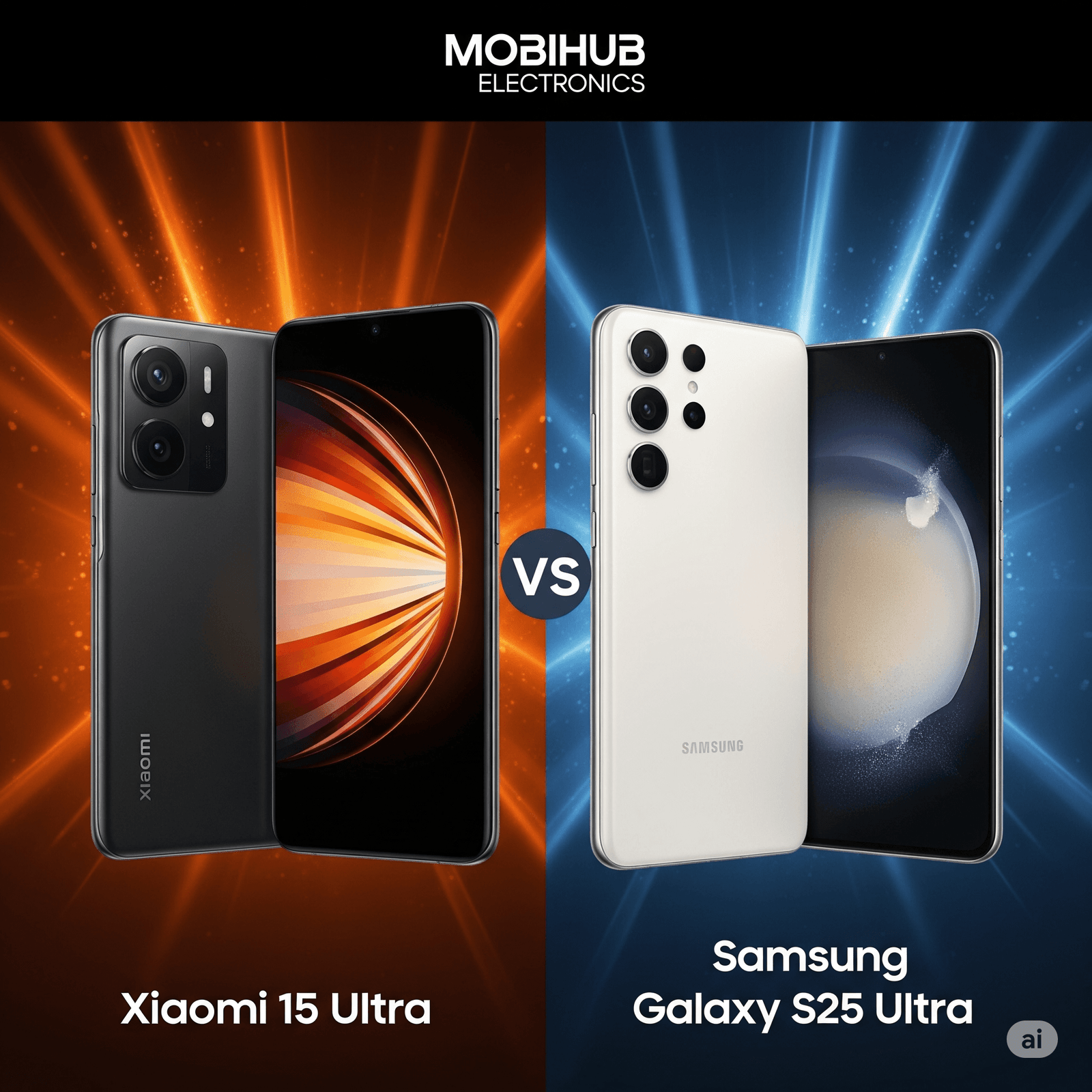
In the highly competitive world of flagship smartphones, two brands consistently vie for the top spot: Samsung, the established titan, and Xiaomi, the ambitious challenger. For the tech-savvy Kenyan consumer, the annual battle of their “Ultra” models is a spectacle of innovation, a showcase of what is possible in the palm of your hand. The Samsung Galaxy S25 Ultra and the Xiaomi 15 Ultra are not just phones; they are a concentration of bleeding-edge technology, each with a distinct philosophy on what makes a smartphone truly “ultimate.”
This in-depth, 3000-word blog post is your definitive guide to this epic showdown. We will meticulously compare every facet of these two devices, from their groundbreaking camera systems and raw performance to their design, display, and charging capabilities. We will provide a clear, side-by-side analysis of the unique features that make each phone a better choice for different users, helping you, the Kenyan consumer, make the most informed decision for a device that is a significant investment.
Part I: The Visual Experience – Design, Build, and Display
The first impression of a flagship phone is its design, and both the Xiaomi 15 Ultra and the Samsung Galaxy S25 Ultra make a powerful statement. They represent the pinnacle of modern smartphone aesthetics and engineering.
The Xiaomi 15 Ultra continues the brand’s commitment to a camera-centric design, featuring a prominent, circular camera module on the back that is both a functional and aesthetic centerpiece. The phone is built with a premium aluminum frame and offers a choice of materials for the back panel, including a stunning eco-leather finish that provides a comfortable and secure grip—a practical feature for navigating the bustling streets of Nairobi. Its display is a gorgeous 6.73-inch LTPO AMOLED panel with a sharp 1440 x 3200-pixel resolution. One of its most impressive features is a peak brightness of an incredible 3200 nits, ensuring perfect visibility even under the harsh equatorial sun. The screen is protected by Xiaomi’s own Shield Glass 2.0 and has an excellent IP68 rating for dust and water resistance.
The Samsung Galaxy S25 Ultra, a product of years of refinement, presents a more minimalist and professional design. It features a sleek, titanium frame, a material known for its durability and light weight, and is protected by the new Corning Gorilla Armor 2 glass, which Samsung claims is its toughest yet and is designed to minimize glare. The device has a slightly larger 6.9-inch Dynamic LTPO AMOLED 2X display with a 1440 x 3120-pixel resolution. Its peak brightness of 2600 nits is exceptionally good, though not quite on par with the Xiaomi’s. Samsung’s signature boxy shape and the integrated S Pen make it stand out as a true productivity powerhouse. The S25 Ultra also boasts a robust IP68 rating.
Clear Unique Comparison: Design and Display
- Xiaomi 15 Ultra’s Unique Advantage: The Xiaomi 15 Ultra’s display has an industry-leading peak brightness of 3200 nits. This is a major selling point for users in Kenya who spend a lot of time outdoors and need a screen that is effortlessly readable in direct sunlight. The eco-leather back also offers a unique, grippy, and sophisticated feel.
- Samsung Galaxy S25 Ultra’s Unique Advantage: The Galaxy S25 Ultra’s main differentiator in design is the integrated S Pen. This stylus is not just a gimmick; it’s a powerful tool for note-taking, sketching, and precise navigation, making the S25 Ultra the clear choice for artists, students, and professionals who rely on these functions. The titanium frame and Corning Gorilla Armor 2 also give it a distinct edge in premium feel and durability.
Part II: The Brains and Brawn – Performance, AI, and Software
The “Ultra” moniker demands nothing but the best in terms of performance. Both of these phones are powered by the most advanced processors on the market, but their software philosophies and AI integration set them apart.
The Xiaomi 15 Ultra is a pure performance beast. It is equipped with the powerful Qualcomm Snapdragon 8 Elite chipset, ensuring that it can handle any task you throw at it with ease. The phone comes with an abundance of RAM, with options of 16GB or even 24GB, which is fantastic for extreme multitasking and future-proofing. It runs on Android 15 with HyperOS 2, a custom skin that is known for its speed, fluidity, and deep customization. While HyperOS is more feature-rich than a stock Android experience, it has become increasingly refined, offering a balance of performance and functionality.
The Samsung Galaxy S25 Ultra also features the powerful Qualcomm Snapdragon 8 Elite for Galaxy, a customized and slightly higher-clocked version of the processor that is specifically tuned for Samsung devices. It comes with up to 16GB of RAM for a smooth user experience. The phone runs on Android 15 with Samsung’s One UI 7, an interface that has been meticulously optimized for the Galaxy S series. However, the S25 Ultra’s real power lies in its Galaxy AI features. This is not just a suite of tools but a deeply integrated system powered by the Gemini AI assistant. Features like “Circle to Search,” real-time call translation, and advanced photo editing are not just add-ons; they are a fundamental part of the S25 Ultra experience. Samsung also offers an industry-leading 7 years of OS and security updates, providing a clear long-term value.
Clear Unique Comparison: Performance and Software
- Xiaomi 15 Ultra’s Unique Advantage: The Xiaomi 15 Ultra’s biggest performance draw is its sheer amount of RAM (up to 24GB), which gives it an edge for power users who demand uncompromising multitasking capabilities. The freedom and customization offered by HyperOS also appeal to users who prefer a more personalized Android experience.
- Samsung Galaxy S25 Ultra’s Unique Advantage: The S25 Ultra’s key feature is its comprehensive and deeply integrated Galaxy AI suite. Features like AI-powered photo editing, real-time translation, and advanced search functionality make the phone feel incredibly smart and futuristic. The S Pen, combined with these AI features, creates a powerful productivity tool unlike any other. The 7 years of software support is also an invaluable commitment to longevity.
Part III: The Ultimate Lens – Camera System and Photography
The “Ultra” battle is often decided by the camera, and here, both phones showcase a different approach to mobile photography.
The Xiaomi 15 Ultra has a camera system co-engineered with Leica, which brings a professional photography ethos to the smartphone. It features a powerful quad-camera setup with a new 200MP main sensor with a variable aperture, a 50MP ultrawide lens, a 50MP telephoto lens with 3x optical zoom, and a groundbreaking 200MP periscope telephoto lens with 4.3x optical zoom. The massive sensor on the periscope telephoto lens allows it to capture stunning detail even at high magnifications. The camera software, with its Leica filters and professional modes, gives users immense creative control. The phone is also capable of recording video in stunning 8K resolution.
The Samsung Galaxy S25 Ultra also has a versatile quad-camera system. It features a new and improved 200MP main sensor, a 50MP ultrawide lens, a 10MP telephoto lens with 3x optical zoom, and a 50MP telephoto lens with 5x optical zoom. Samsung’s strength lies in its AI-powered ProVisual Engine, which enhances every aspect of photography and video recording. The S25 Ultra is a master of computational photography, producing consistently vibrant and detailed photos with minimal effort. Its 100x Space Zoom, a feature refined over several generations, remains an impressive party trick. For video, the S25 Ultra is also a top contender, with excellent stabilization and features.
Clear Unique Comparison: Camera System
- Xiaomi 15 Ultra’s Unique Advantage: The Xiaomi 15 Ultra’s Leica-tuned cameras, especially the 200MP periscope telephoto lens, are its most compelling camera feature. The combination of a large sensor and a high megapixel count on the telephoto lens allows for incredibly detailed zoomed-in shots that often surpass the competition. The availability of multiple professional shooting modes and filters also gives it an edge for serious photographers.
- Samsung Galaxy S25 Ultra’s Unique Advantage: The S25 Ultra’s 5x optical zoom and legendary 100x Space Zoom are a key feature that provides a greater range for telephoto shots. Samsung’s computational photography and AI-enhanced features, combined with the versatility of its lenses, make it an incredibly user-friendly camera that delivers excellent results in any situation. The seamless integration of the S Pen for quick editing is also a unique benefit.
Part IV: Staying Power – Battery Life and Charging
In a market where consumers are always on the go, a phone’s battery life and charging speed are non-negotiable.
The Xiaomi 15 Ultra is a champion of charging. It is equipped with a large 5410mAh battery, which provides excellent endurance for a full day of heavy use. Its most impressive feature is its charging technology. It supports an incredible 90W wired charging, which can fully charge the device from 0 to 100% in a little over 30 minutes. It also supports fast 80W wireless charging, making it one of the fastest wireless charging phones on the market.
The Samsung Galaxy S25 Ultra has a slightly smaller 5000mAh battery. While it offers a respectable full day of use thanks to the efficiency of its custom chipset and software, its charging speeds are not as fast as the Xiaomi’s. It supports 45W wired charging, which is a decent speed but still significantly slower than its rival. It also supports 15W wireless charging, which is standard for a flagship but pales in comparison to the Xiaomi 15 Ultra’s offering.
Clear Unique Comparison: Battery and Charging
- Xiaomi 15 Ultra’s Unique Advantage: The Xiaomi 15 Ultra’s 90W wired and 80W wireless charging is its most clear and powerful practical advantage. For the Kenyan user who values the ability to quickly top up their phone in a matter of minutes, the Xiaomi is the clear winner.
- Samsung Galaxy S25 Ultra’s Unique Advantage: The S25 Ultra, while not the fastest to charge, offers a reliable and well-optimized battery life. Its support for Wireless PowerShare is a unique and useful feature that allows you to charge other Qi-enabled devices, like your Galaxy Buds or a smartwatch, directly from the back of your phone.
Part V: The Reality on the Ground – Price and Availability in Kenya
When all the features are considered, the final decision for the Kenyan consumer often comes down to price and the local support ecosystem.
The Xiaomi 15 Ultra is priced competitively, with a starting price around KSh 143,500 to KSh 161,500. While Xiaomi has a growing presence in Kenya, its official distribution network and after-sales support are still not as extensive as Samsung’s. This means that warranty and repair services can sometimes be a challenge, relying on a more fragmented network of authorized and third-party resellers.
The Samsung Galaxy S25 Ultra is a premium-priced device, with a starting price around KSh 171,999 to KSh 190,000. Samsung has an official and well-established presence in the Kenyan market, with a wide network of official retailers and service centers. This provides buyers with the invaluable peace of mind of a local warranty, reliable after-sales support, and a guaranteed resale value, which is often a major consideration for a high-value purchase.
Clear Unique Comparison: Price and Availability
- Xiaomi 15 Ultra’s Unique Advantage: The Xiaomi 15 Ultra offers a better value proposition in terms of raw specifications for its price. For the user who wants the most powerful hardware and the fastest charging for their money, the Xiaomi is a compelling choice.
- Samsung Galaxy S25 Ultra’s Unique Advantage: The Samsung Galaxy S25 Ultra’s strong local presence, official warranty, and reliable after-sales support are its most significant unique selling points in Kenya. For a device that is a major investment, this peace of mind and the guarantee of a smooth ownership experience are often worth the premium price.
Conclusion: The Ultimate Decision
The Xiaomi 15 Ultra and the Samsung Galaxy S25 Ultra are both incredible pieces of technology. They represent the pinnacle of Android innovation and are, in many ways, the best that money can buy. The choice between them is not about which is objectively better, but rather about which one aligns more with your personal needs and priorities.
Choose the Xiaomi 15 Ultra if:
- You are a photography enthusiast who wants a professional-grade camera system co-engineered with Leica, especially the groundbreaking 200MP periscope telephoto lens.
- You demand the absolute best in raw performance and multitasking, with a Snapdragon 8 Elite chipset and up to 24GB of RAM.
- Fast charging is your top priority, and you want the convenience of a 90W wired and 80W wireless charging.
- You are comfortable with a less-established local support network in exchange for a more competitive price and groundbreaking hardware.
Choose the Samsung Galaxy S25 Ultra if:
- You are a creative or professional who will make use of the integrated S Pen for note-taking, drawing, and precision tasks.
- You want a phone with a deeply integrated AI experience through Galaxy AI and the Gemini assistant.
- You prioritize a refined and user-friendly camera with a superior 5x optical zoom and a robust software engine.
- You value the peace of mind that comes with a strong local warranty, reliable after-sales support, and the highest resale value in the Kenyan market.
Ultimately, the Xiaomi 15 Ultra is the uncompromising hardware champion, a phone for the spec-obsessed and the photography purist. The Samsung Galaxy S25 Ultra is the refined, all-in-one powerhouse, a phone for the professional and the user who values a complete and intuitive ecosystem. In the vibrant Kenyan market, both phones offer a taste of the future, and the choice is now yours to make.