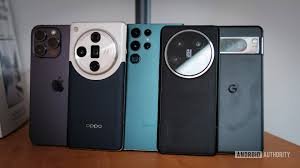




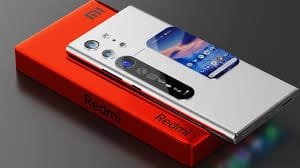
In the fiercely competitive mid-range smartphone arena, two titans are vying for the attention of photography enthusiasts: the Google Pixel 9a and the Redmi Note 15 Pro+. Both phones represent the pinnacle of their respective philosophies, but their approach to capturing light and detail couldn’t be more different (Source 1.2, 5.1).
The Redmi Note 15 Pro+ throws down the gauntlet with sheer hardware muscle: a massive $\mathbf{200\text{MP}}$ primary camera sensor ($\mathbf{1/\mathbf{1.4}\text{-inch}}$ sensor size) paired with $\mathbf{4\text{X}}$ lossless zoom, promising unparalleled resolution and the power of over two hundred million pixels (Source 1.1, 1.3, 3.2).
Conversely, the Google Pixel 9a relies on the legendary “Pixel Magic.” It features a more modest $\mathbf{48\text{MP}}$ main camera (Source 1.1, 5.1) but couples it with the advanced $\text{Tensor \text{ G4}}$ chip and a suite of cutting-edge $\text{AI}$ computational photography algorithms that have historically allowed Pixel phones to punch far above their hardware weight (Source 2.1, 2.3).
This clash is more than a simple spec comparison; it’s a philosophical debate: Does brute-force resolution from a huge sensor triumph, or is sophisticated $\text{AI}$ processing the true path to a perfect picture? Mobihub takes a deep dive into these two titans, comparing their strengths in detail, low light, and sheer creative potential.
1. 🔍 The Hardware War: $\mathbf{200\text{MP}}$ vs. $\mathbf{48\text{MP}}$
At the core of this comparison are the primary sensors, which define the raw image data captured by each device.
1.1. Redmi Note 15 Pro+: The Megapixel Mania
The Redmi Note 15 Pro+ is engineered around its $\mathbf{200\text{MP}}$ primary camera (Source 1.1, 3.2). This massive sensor, often a Samsung $\text{ISOCELL}$ variant, is built to achieve maximal detail.
- Pixel Binning Advantage: In most shooting conditions, the $\mathbf{200\text{MP}}$ sensor utilizes $\text{16-in-1}$ $\text{Pixel \text{ Binning}$ (Source 1.3, 3.2). This process merges $\mathbf{16}$ adjacent pixels into one large $\mathbf{2.24\mu\text{m}}$ “Super Pixel,” resulting in a high-quality $\mathbf{12.5\text{MP}}$ final image (Source 1.3, 3.2). This technique drastically increases light sensitivity, improving low-light performance while still maintaining competitive resolution.
- Sheer Detail ($\mathbf{200\text{MP}}$ Mode): When manually shooting in full $\mathbf{200\text{MP}}$ mode, the phone captures colossal image files (often $\mathbf{50\text{MB}}$ or more). This mode is invaluable for highly detailed landscape or architecture shots where the user needs to crop significantly later without losing quality (Source 1.3, 3.2).
- Lossless Zoom: The high resolution is leveraged for $\mathbf{2\text{X}}$ and $\mathbf{4\text{X}}$ “optical-level” lossless zoom (Source 1.3, 3.2). The phone crops into the massive $\mathbf{200\text{MP}}$ image, using the central $\mathbf{50\text{MP}}$ or $\mathbf{12.5\text{MP}}$ section to create a magnified, high-detail image without relying on poor digital upscaling (Source 1.3).
- Supporting Lenses: The Redmi’s secondary lenses are standard for its class: an $\mathbf{8\text{MP}}$ $\text{Ultra-wide}$ and a dedicated $\mathbf{2\text{MP}}$ $\text{Macro}$ sensor (Source 1.1, 3.2).
1.2. Google Pixel 9a: The Quality Sensor
The Pixel 9a’s camera approach is more focused on sensor quality and consistency rather than megapixel count (Source 1.1).
- Main Sensor: It features a $\mathbf{48\text{MP}}$ $\text{Quad \text{ Bayer}$ sensor with $\text{OIS}$ and a fast $f/1.7$ aperture (Source 1.1, 5.1). This sensor typically outputs a $\mathbf{12\text{MP}}$ image after $\text{4-in-1}$ binning. While the raw $\text{MP}$ count is lower, Google prioritizes larger individual pixel size ($\mathbf{0.8\mu\text{m}}$ raw, $1.6\mu\text{m}$ binned) and superior data processing (Source 1.1, 5.1).
- Dual Camera Setup: Unlike the Redmi’s $\text{Triple \text{ Camera}$ setup, the Pixel 9a uses a simpler $\text{Dual \text{ Camera}$ system (Source 1.1, 5.1). Its secondary lens is a high-quality $\mathbf{13\text{MP}}$ $\text{Ultra-wide}$ camera, generally providing a sharper, more consistent image than the $\mathbf{8\text{MP}}$ sensor on the Redmi (Source 1.1, 5.1).
- Super Res Zoom: For zoom, the Pixel relies entirely on $\text{Super \text{ Res \text{ Zoom}$ (up to $\mathbf{8\text{X}}$), a software-driven technique that uses the $\text{Tensor \text{ G4}$ chip to intelligently combine multiple frames and reconstruct missing detail (Source 2.1, 2.3).
2. 🧠 The $\text{AI}$ Factor: Computational Photography Mastery
This is where the Google Pixel 9a truly shines. Google’s computational photography, powered by the $\text{Tensor \text{ G4}$ $\text{AI}$ core, is designed to overcome hardware limitations and deliver aesthetically pleasing, instantly shareable images (Source 2.1, 2.3).
2.1. Pixel’s Signature $\text{AI}$ Tools
The $\text{AI}$ on the Pixel is not an option; it’s the core of the imaging pipeline:
- $\text{HDR+}$ and $\text{Real \text{ Tone}$: The Pixel’s $\text{HDR+}$ captures a burst of frames, aligns them, and merges them to create an image with immense dynamic range—bright highlights are tamed, and shadows are lifted without looking unnatural (Source 2.2). $\text{Real \text{ Tone}$ ensures accurate representation of all skin tones, a critical social and photographic feature (Source 2.1).
- $\text{Magic \text{ Editor}$ and $\text{Magic \text{ Eraser}$: These post-capture $\text{AI}$ tools allow users to easily move or resize subjects in an image, or “magically” erase unwanted objects or people, turning an ordinary photo into a professional-looking composition (Source 2.1, 2.3).
- $\text{Best \text{ Take}$ and $\text{Add \text{ Me}$: Features like $\text{Best \text{ Take}$ allow the $\text{AI}$ to swap faces in group photos to ensure everyone has their best expression, while $\text{Add \text{ Me}$ allows the photographer to seamlessly insert themselves into a group shot they just took (Source 2.1, 2.4). These features are unique to the Pixel line and focus on solving real-world photo frustrations.
- Night $\text{Sight}$: $\text{Night \text{ Sight}$ uses long-exposure bracketing and $\text{AI}$ stabilization to produce bright, detailed, and clear low-light images that often look better than pictures taken by phones with physically larger sensors (Source 2.2).
2.2. Redmi’s $\text{AI}$ – Hardware $\text{Assist}$
The Redmi Note 15 Pro+ also uses $\text{AI}$, but its role is primarily to enhance the raw sensor data, not to fundamentally restructure the image:
- $\text{Xiaomi \text{ Imaging \text{ Engine}$: The Redmi uses its own $\text{AI}$-boosted algorithms for tasks like $\text{End-to-End}$ $\text{AI \text{ Remosaic}$, which is essential for processing the massive $\mathbf{200\text{MP}}$ files quickly and efficiently (Source 1.3, 3.2).
- $\text{AI \text{ Erase \text{ Pro}$: The Note 15 Pro+ is catching up with features like $\text{AI \text{ Erase \text{ Pro}}$, which allows users to remove clutter from their photos—a direct competition to Google’s $\text{Magic \text{ Eraser}$ (Source 1.3, 3.2).
- Motion Tracking: The $\text{AI}$ assists with Motion Tracking $\text{Capture \text{ mode}$ to ensure fast-moving subjects (like pets or kids) are captured with clarity and high dynamic range, compensating for the limitations of a large sensor in motion scenarios (Source 3.2).
3. 🌙 Low Light and Video Performance
Low light is the ultimate proving ground for a camera system, testing the synergy between hardware light capture and software processing.
3.1. Low Light: Size vs. Smarts
- Redmi Note 15 Pro+ ($\text{Size}$): The Redmi’s large $\mathbf{1/\mathbf{1.4}\text{-inch}}$ sensor combined with $\text{16-in-1}$ pixel binning for a $\mathbf{2.24\mu\text{m}}$ “Super Pixel” is a formidable combination (Source 1.3, 3.2). In purely dark scenes, it captures more raw light, often leading to less visible noise and a brighter image overall than its competitor (Source 4.1).
- Pixel 9a ($\text{Smarts}$): The Pixel’s $\text{Night \text{ Sight}$ focuses on tonal accuracy, colour fidelity, and sharpness over sheer brightness (Source 2.2). The $\text{Tensor \text{ G4}$ processes the data to restore detail and apply realistic colors, resulting in a more aesthetic and balanced low-light photograph that avoids the over-processed look common in high-$\text{MP}$ binning (Source 2.2).
3.2. Video Capabilities
The Pixel tends to win on video consistency and features, while the Redmi wins on raw resolution output.
- Pixel 9a: Supports $\mathbf{4K}$ $\mathbf{60\text{fps}}$ recording (Source 1.1) with Google’s industry-leading video stabilization ($\text{gyro-EIS}$ and $\text{OIS}$) (Source 1.4, 2.3). Its $\text{AI}$ processing provides superior dynamic range in video.
- Redmi Note 15 Pro+: The $\mathbf{200\text{MP}}$ sensor theoretically supports up to $\mathbf{8K}$ $\mathbf{24\text{fps}}$ video (Source 3.3), but the most practical setting is $\mathbf{4K}$ $\mathbf{30\text{fps}}$ (Source 1.1, 3.1). The $\text{OIS}$ and $\text{EIS}$ are present, but the overall processing consistency and look of the video often fall slightly behind Google’s sophisticated colour science.
4. ⚖️ Value and Ecosystem: The Final Compromise
When choosing between the Pixel 9a and the Redmi Note 15 Pro+, the decision extends beyond the camera module to the entire user experience and price segment.
4.1. Price and Positioning
- Redmi Note 15 Pro+ (The $\text{Value}$ King): The Redmi Note 15 Pro+ typically undercuts the Pixel 9a significantly in price (Source 1.2, 5.1). It packs an impressive $\mathbf{7000\text{mAh}}$ battery, $\mathbf{120\text{W}}$ $\text{HyperCharge}$ (Source 3.3), and a $\mathbf{120\text{Hz}}$ $\text{AMOLED}$ screen (Source 3.1), making it the undisputed value-for-money champion (Source 3.3). Its appeal is to the user who wants the most hardware for their money.
- Pixel 9a (The $\text{Experience}$ King): The Pixel 9a is generally positioned slightly higher, reflecting the cost of the advanced $\text{Tensor \text{ G4}$ chip and the proprietary $\text{AI}$ software (Source 1.2, 5.1). Its appeal is to the user who prioritizes a clean $\text{Android}$ experience, immediate software updates, and the seamless, magic-like $\text{AI}$ photography tools (Source 2.1).
4.2. Usability and Workflow
- Pixel Workflow: The Pixel is the choice for the ‘point-and-shoot’ minimalist (Source 2.3). Its images require almost no user intervention. The $\text{AI}$ does the heavy lifting, delivering a beautifully processed, final image immediately.
- Redmi Workflow: The Redmi appeals to the spec-hunter and the detail-obsessed user. The $\mathbf{200\text{MP}}$ mode requires the user to know how and when to use it, and the images often require more post-processing for optimal color and contrast correction.
5. 👑 Conclusion: $\text{AI}$ for the Everyday, $\text{MP}$ for the Enthusiast
The clash between the Pixel 9a and the Redmi Note 15 Pro+ is the clearest modern example of $\text{AI}$ versus raw hardware power in mobile photography.
For the majority of users—those who want an image that is instantly beautiful, consistently great across all lighting conditions, and features best-in-class $\text{AI}$ editing tools like $\text{Magic \text{ Editor}$—the Google Pixel 9a remains the superior choice (Source 2.1). Its $\mathbf{48\text{MP}}$ main camera, supported by the $\text{Tensor \text{ G4}$ chip, delivers photographic results that are more aesthetically balanced and require zero effort.
However, the Redmi Note 15 Pro+ offers genuine advantages for specific segments. For the detail enthusiast who values the ability to capture immense raw resolution, achieve optical-level zoom clarity, and get the most hardware for their budget (with $\mathbf{120\text{W}}$ charging and a massive battery to boot), the $\mathbf{200\text{MP}}$ sensor provides an unrivaled technical canvas (Source 3.3).
In the end, the $\text{Pixel \text{ 9a}$ wins the battle for the best final photograph and best user experience, while the $\text{Redmi \text{ Note \text{ 15 \text{ Pro}+}$ wins the battle for best raw specification and best value proposition. The choice is between automated photographic excellence and raw, massive, zoomable detail.